Checking your tyre pressure is the cheapest, quickest thing you can do for your safety, your fuel bills and how long your tyres last - and it is the one thing almost everyone forgets.
There is no single number - it is set by your car maker, not the tyre. You will usually find it on a sticker (placard) in the driver's door shut or on the fuel filler flap, and in the handbook. Many cars list two figures: a normal pressure and a higher one for when the car is fully laden with passengers and luggage. Pressure is shown in PSI (pounds per square inch) or bar - and 1 bar is roughly 14.5 PSI.
Tyres warm up as you drive, and warm air expands, so a tyre checked hot will read higher than it really is. Always check "cold" - before you set off, or after driving less than a couple of miles - so you are setting the true pressure against the recommended figure.
At least monthly, and before long trips or when carrying a heavy load. Most modern cars also have a tyre pressure monitoring system (TPMS) that warns you when a tyre drops - but that is a backstop, not a substitute for a monthly manual check.
“It is the cheapest, easiest thing you can do for your safety and your wallet, and it is the one thing almost everyone forgets. Five minutes with a gauge once a month saves you money on fuel and tyres - and could save you a lot more than that in the wet.”
It's set by your car maker - check the sticker in the driver's door shut or fuel flap, or the handbook. Many cars list a normal and a fully-laden figure.
Cold - before driving or after less than a couple of miles. Heat raises the reading and gives a false figure.
At least once a month, and before long journeys or when carrying a heavy load.
Yes - it shrinks the contact patch (less grip, longer braking), wears the centre of the tread and gives a harsher ride.
Yes - under-inflated tyres increase rolling resistance and fuel use, so correct pressures cut your fuel bills.
Call now for a fast, no-obligation quote - or drop your details in and we'll come back to you.
07772 078 648Real jobs, callouts and behind-the-scenes from the GTL van. Subscribe on YouTube →
Your tyre size is printed on the sidewall of the tyre - a string like 205/55 R16 91V. Here's what each number and letter means.
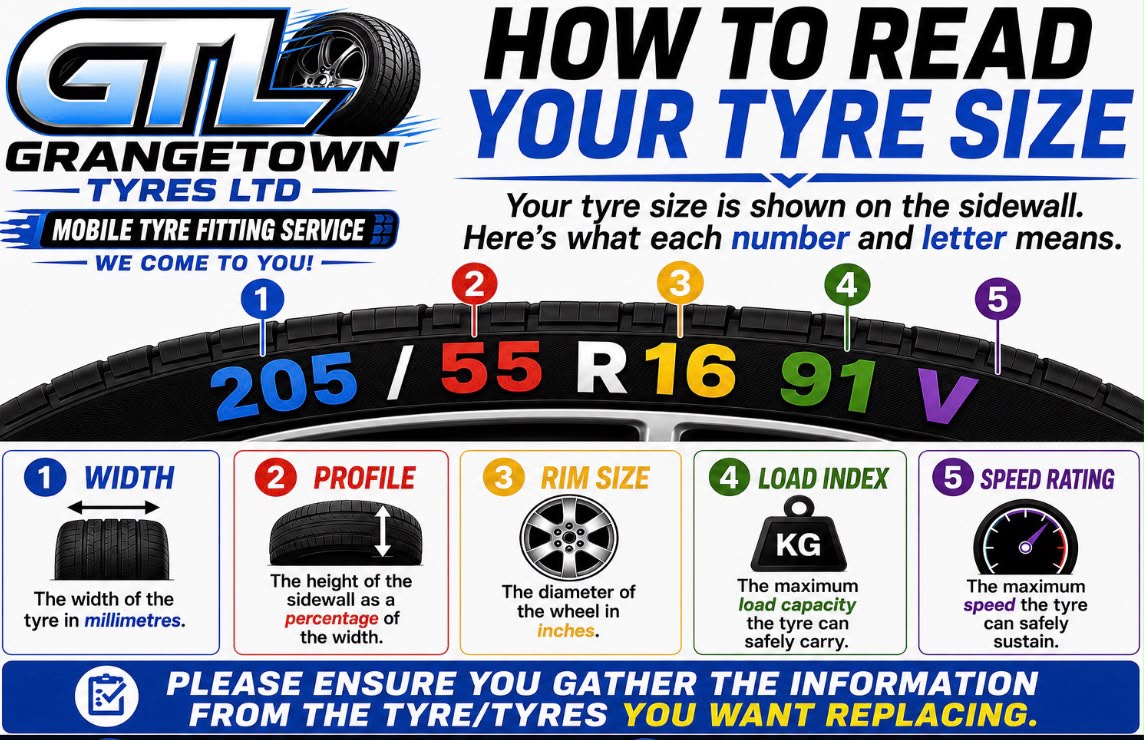
Please take the size from the exact tyre(s) you want replacing - front and rear sizes can differ.