
That little horseshoe-shaped warning light catches drivers out every day. Here's what your TPMS is telling you, why it matters for your MOT, and exactly what to do when it appears.
TPMS stands for Tyre Pressure Monitoring System. It's an electronic system that keeps an eye on your tyre pressures and warns you - via a dashboard light - if one drops too low. Underinflated tyres are dangerous: they reduce grip and braking, wear out faster, increase fuel consumption and can overheat and fail.
A TPMS warning can mean several things:
If the light flashes when you start up and then stays on, that usually points to a system fault rather than a soft tyre - worth getting checked.
Direct systems use a battery-powered sensor inside each wheel that measures the actual pressure and sends it to the car. Accurate, but the sensors have a finite battery life and need attention when you change tyres.
Indirect systems don't measure pressure directly. Instead they use the ABS wheel-speed sensors: an underinflated tyre is slightly smaller and spins a little faster, which the system detects. There's no sensor to replace, but it must be reset after inflating or changing tyres.
Yes. TPMS has been mandatory on all new cars sold in the UK and EU since November 2014, and it became part of the MOT test in 2015 for vehicles first used on or after 1 January 2012. If the TPMS warning light is illuminated at the MOT, it's an automatic fail - so it's not something to ignore.
“People panic when the light comes on, but nine times out of ten it's just a soft tyre or a slow puncture. The bit that catches drivers out is the MOT - if that light's on, it's an automatic fail. We can check your pressures, sort a puncture and reset or replace a sensor right at your door.”
When you have new tyres fitted on a direct system, the sensors need to be handled with care and the system reset, cloned or - if a sensor battery has died - replaced. Direct sensor batteries typically last around 5-10 years. A good mobile fitter will check and reset your TPMS as part of the job.
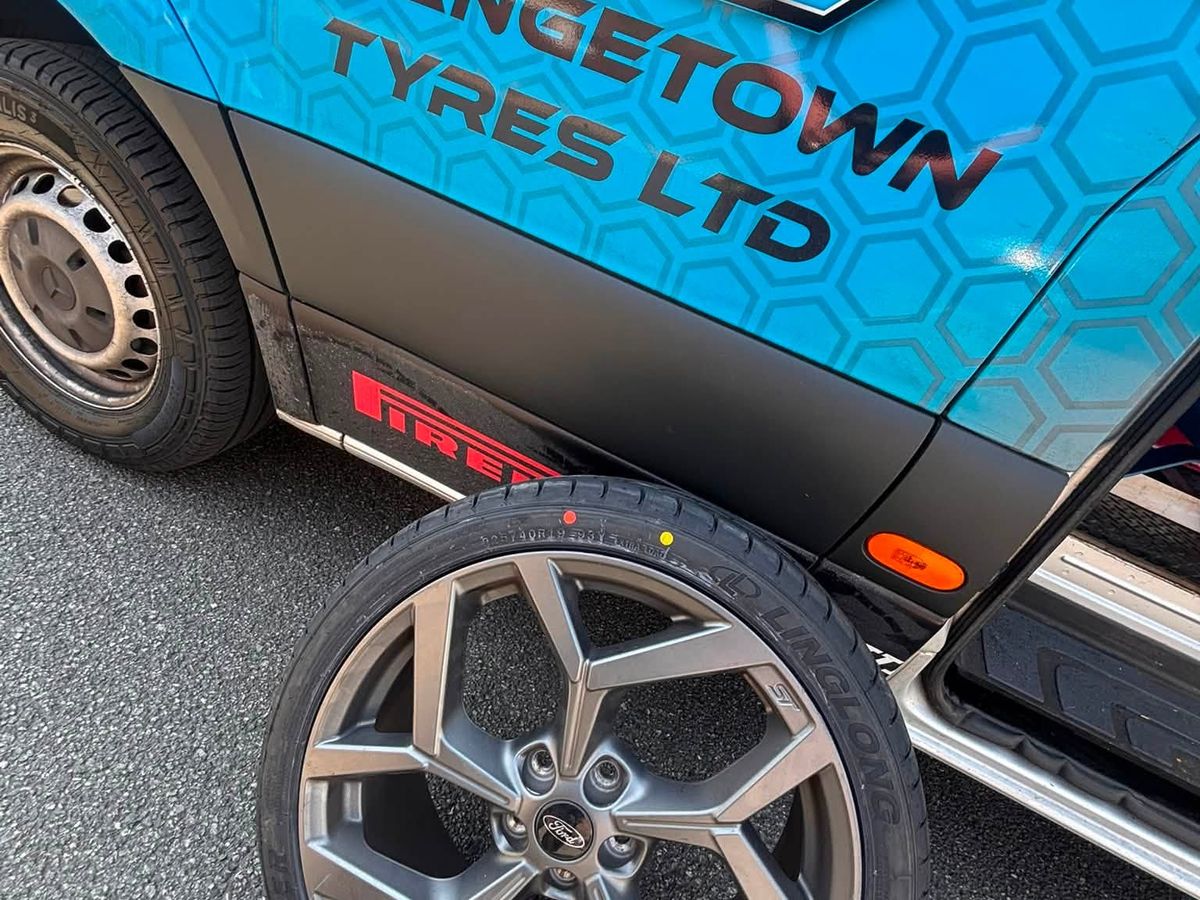
Keeping your tyres at the right pressure isn't just about the warning light. Correct pressures mean shorter braking distances and better grip, lower fuel bills, longer tyre life and more even wear. TPMS is simply there to help you stay on top of it.
Not always. It means at least one tyre is low on pressure - which could be a slow puncture, a temperature drop, or simply a tyre that needs topping up. Check your pressures and inspect for damage.
Yes. Since 2015, an illuminated or faulty TPMS is an automatic MOT failure for cars first used on or after 1 January 2012.
Direct TPMS sensor batteries typically last around 5-10 years, after which the sensor usually needs replacing.
Yes. The system should be reset - and on direct systems the sensors checked or replaced - whenever tyres are changed.
Yes. We can check pressures, repair punctures, and reset or replace TPMS sensors at your home or work.
Call now for a fast, no-obligation quote - or drop your details in and we'll come back to you.
07772 078 648Real jobs, callouts and behind-the-scenes from the GTL van. Subscribe on YouTube →
Your tyre size is printed on the sidewall of the tyre - a string like 205/55 R16 91V. Here's what each number and letter means.
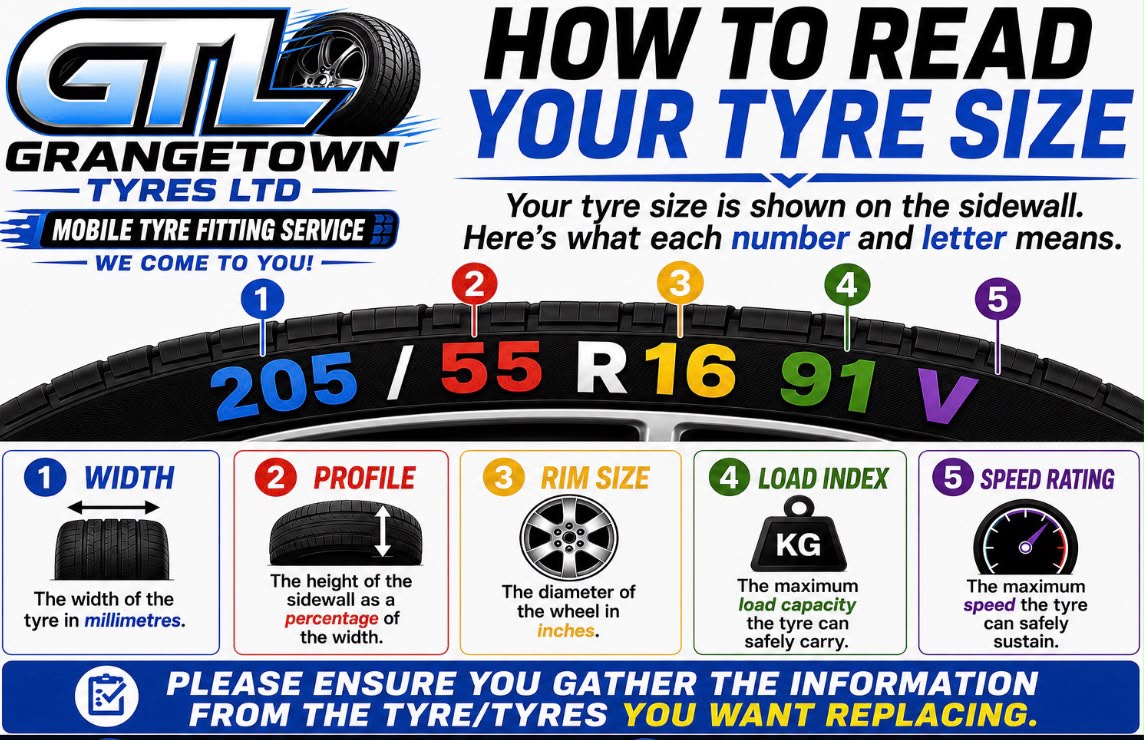
Please take the size from the exact tyre(s) you want replacing - front and rear sizes can differ.