
Tyres don't last forever - and it's not just about tread. Here's how long you can realistically expect them to last, and the signs it's time for new ones.
There's no single figure, because it depends on how and where you drive. As a rough guide, many tyres last somewhere between 20,000 and 40,000 miles - but two things end a tyre's life: wearing down the tread, and simply getting old. Even a barely-used tyre shouldn't stay on the car indefinitely.
Not an official one, but rubber hardens and degrades with age whether the tyre is used or not. You can find when a tyre was made from the four-digit code on the sidewall - the first two digits are the week, the last two the year (so "2523" means the 25th week of 2023). Most manufacturers recommend replacing tyres at 7-10 years regardless of tread. For heavy vehicles the law is stricter still: since February 2021, tyres over 10 years old are banned from the front axles of lorries, buses and coaches (see our UK tyre law guide).
“Tread's only half the story - we see plenty of tyres with legal tread that are cracked and perished because the car's been sat, or the tyres are simply ten years old. If yours are getting on, get them looked at. It's a five-minute check and we'll always be straight with you.”
It varies with driving and storage, but many last 20,000-40,000 miles. Regardless of tread, most should be replaced at 7-10 years as the rubber degrades.
Check the four-digit date code on the sidewall: the first two digits are the week and the last two the year of manufacture.
There's no legal expiry for car tyres, but 7-10 years is the usual guidance because rubber hardens and cracks with age.
At the latest when tread nears the 1.6mm legal limit (3mm is safer), or sooner if you see cracking, bulges or uneven wear, or the tyres are very old.
Call now for a fast, no-obligation quote - or drop your details in and we'll come back to you.
07772 078 648Real jobs, callouts and behind-the-scenes from the GTL van. Subscribe on YouTube →
Your tyre size is printed on the sidewall of the tyre - a string like 205/55 R16 91V. Here's what each number and letter means.
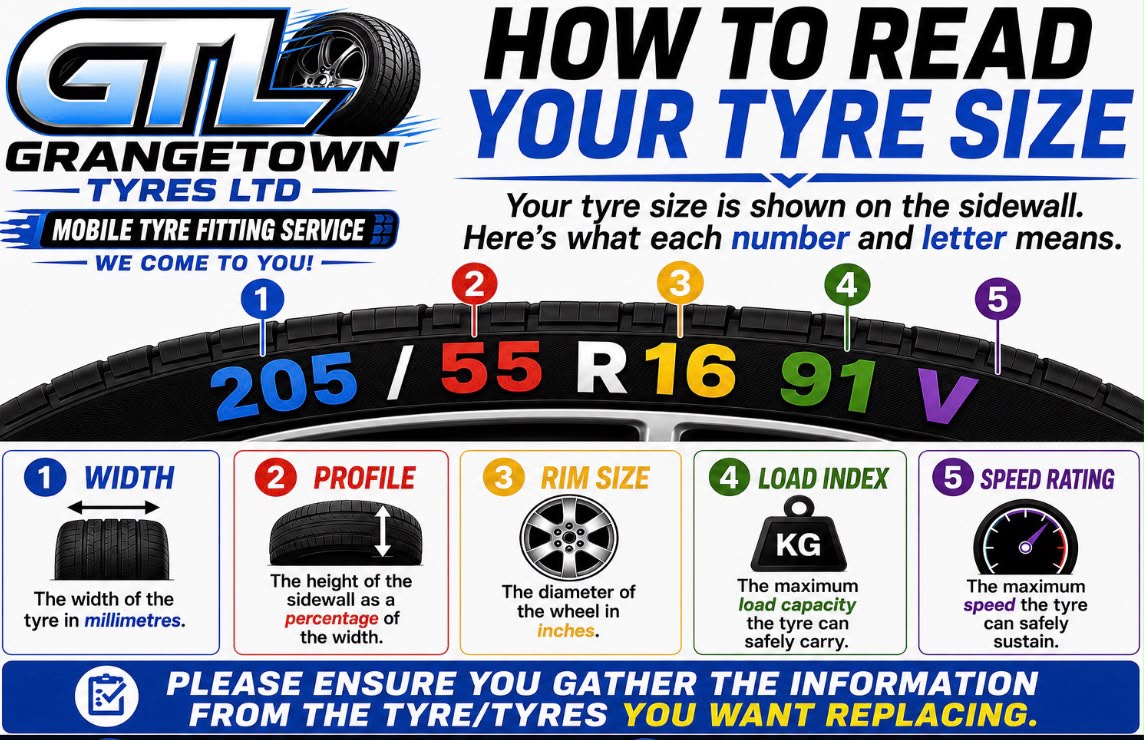
Please take the size from the exact tyre(s) you want replacing - front and rear sizes can differ.