โšก Mobile tyre fitting - we come to you across the North East
HomeTyre GuidesHow to Change a Tyre Safely (Step by Step)

How to Change a Tyre Safely (Step by Step)

A flat doesn't have to ruin your day. If you're somewhere safe and you have a spare, here's how to change a tyre properly - and when you're better off calling for help instead.
Updated July 20266 min read

Before you start

  • Park on firm, level ground, handbrake on, hazard lights on
  • Loosen the wheel nuts BEFORE you jack the car up
  • Only ever lift the car on the manufacturer's jacking points
  • A space-saver spare: max 50 mph and no more than 50 miles

What you'll need

  • The jack and wheel brace (usually in the boot or spare wheel well)
  • Your locking wheel nut key, if fitted
  • The spare or space-saver - checked and inflated
  • A warning triangle, and gloves if you have them

Step by step

  1. Pull over somewhere safe and level, apply the handbrake and switch on your hazards. Put a warning triangle out if it's safe to
  2. Get all passengers out and, if you can, chock the wheel diagonally opposite the flat
  3. Remove any wheel trim and loosen each wheel nut about half a turn while the wheel is still on the ground
  4. Place the jack at the correct jacking point and raise the car until the flat tyre is just clear of the ground
  5. Undo the nuts fully and lift the wheel off
  6. Fit the spare, then hand-tighten the nuts in a diagonal (star) pattern
  7. Lower the car back down, then fully tighten the nuts in the same star pattern
  8. Stow the flat, check the spare's pressure, and get the flat repaired or replaced as soon as you can
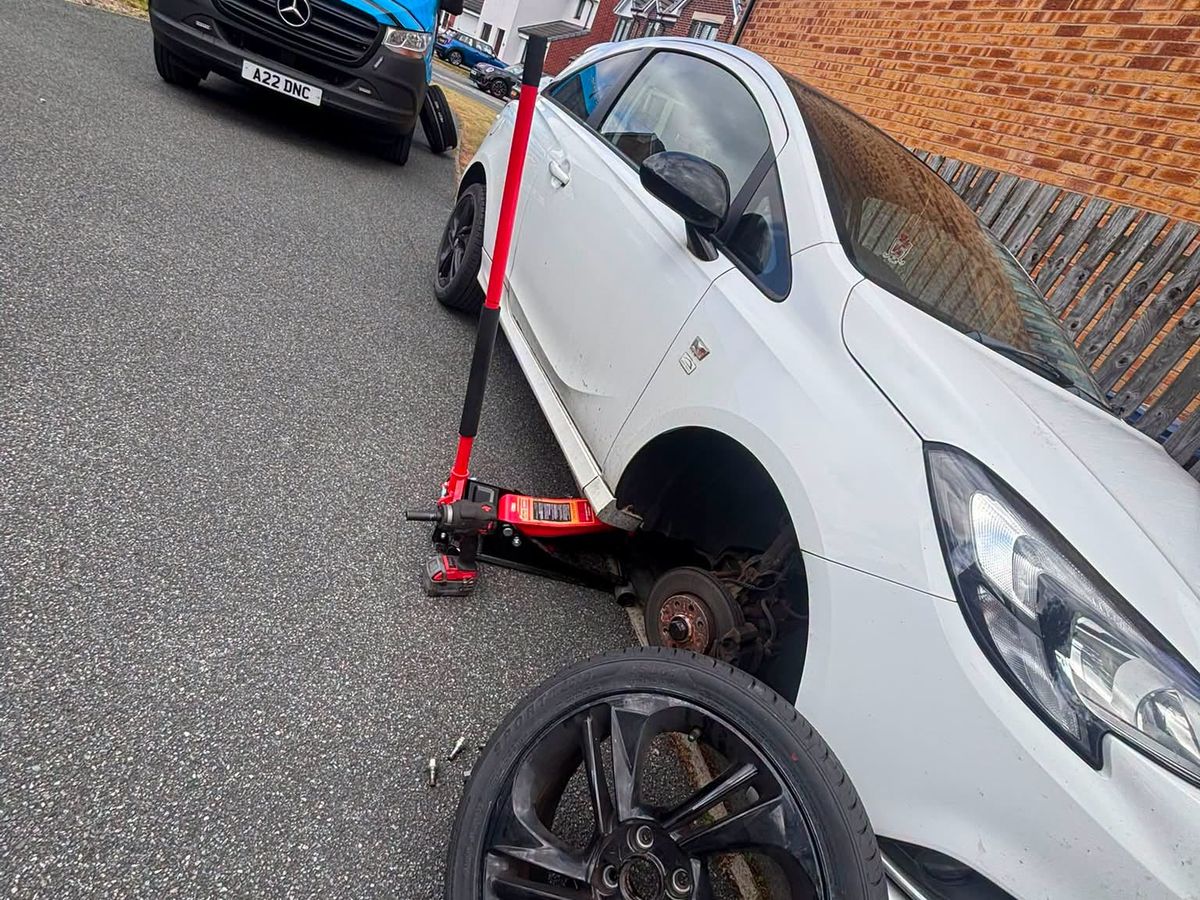
A wheel being changed at the roadside

If it's a space-saver spare

Space-savers are a get-you-home tool only: don't exceed 50 mph or drive more than about 50 miles, and get your proper tyre sorted straight away. Many new cars don't carry a spare at all - see our spare wheel vs repair kit guide.

When to call instead of changing it yourself

  • On a motorway or fast road - get behind the barrier and call for help; never change a wheel in a live lane
  • If you have no spare, or a repair kit won't hold
  • If you've lost your locking wheel nut key
  • If the ground isn't safe, or you're simply not confident

“There's no shame in not changing it yourself - on a motorway hard shoulder you shouldn't, and loads of new cars don't even carry a spare. That's exactly what we're for: one call and we'll come to you with the right tyre.”

AD
Aaron Duncan
Owner, Grangetown Tyres

Sources & further reading

Frequently asked questions

Should I loosen the wheel nuts before or after jacking?

Before - crack them loose about half a turn while the wheel is still on the ground, or it will just spin once it's lifted.

How far can I drive on a space-saver spare?

No more than 50 miles and no faster than 50 mph, then get your proper tyre repaired or replaced.

What if my car has no spare wheel?

Many new cars don't - you'll have a repair kit or nothing. If the kit won't fix it, call a mobile tyre fitter to come to you.

Is it safe to change a tyre on the motorway?

No - never change a wheel in a live lane or on the hard shoulder. Get behind the barrier and call for assistance.

Need tyres sorted? Let's get you moving.

Call now for a fast, no-obligation quote - or drop your details in and we'll come back to you.

07772 078 648

Request a call back

Got it - thanks!

We'll call you back as soon as we can. For anything urgent, call 07772 078 648.

๐Ÿ“ž Call Us Get a Quote โ†’